Nestled atop the picturesque Nilachal Hill in Guwahati, Assam, Kamakhya Temple is one of the most sacred and powerful pilgrimage destinations in India. Revered as one of the 51 Shakti Peethas, the temple attracts millions of devotees, spiritual seekers, and tourists every year. Dedicated to Goddess Kamakhya, a manifestation of Goddess Shakti, this ancient shrine holds immense religious, historical, and cultural significance.
Unlike most Hindu temples, Kamakhya Temple does not house an idol of the goddess. Instead, devotees worship a naturally formed rock crevice that symbolizes the divine feminine energy. The temple is also known as the center of Tantric worship in India and is famous for hosting the annual Ambubachi Mela, one of the country’s largest spiritual gatherings.
Whether you are a devotee seeking blessings, a history enthusiast exploring Assam’s heritage, or a traveler looking for unique cultural experiences, Kamakhya Temple offers an unforgettable journey into spirituality and tradition.
History of Kamakhya Temple
The origins of Kamakhya Temple can be traced back to the 8th and 9th centuries when it emerged as an important center of Shakti and Tantric worship. Historical records suggest that the temple flourished during the rule of the ancient Kamarupa Kingdom. Over centuries, it became one of the most influential religious sites in Northeast India.
According to historical accounts, the original temple suffered damage during invasions. Later, in the 16th century, King Naranarayana and his brother Chilarai of the Koch dynasty reconstructed the shrine and restored its glory. Since then, several rulers, including the Ahoms, contributed to the maintenance and expansion of the temple complex.
Today, the temple stands as a magnificent symbol of Assam’s rich religious heritage and architectural excellence.
Mythological Significance of Kamakhya Temple
Kamakhya Temple is deeply connected with the legend of Goddess Sati and Lord Shiva.
According to Hindu mythology, when Goddess Sati sacrificed herself after her father Daksha insulted Lord Shiva, Shiva carried her lifeless body across the universe in grief. To restore cosmic balance, Lord Vishnu used his Sudarshan Chakra to divide Sati’s body into several parts. The places where these body parts fell became known as Shakti Peethas.
It is believed that the yoni (womb) of Goddess Sati fell at the site of Kamakhya Temple. This makes it one of the holiest Shakti Peethas and a powerful symbol of creation, fertility, and feminine energy.
Spiritual Significance
Kamakhya Temple is unique because it celebrates the creative power of nature and womanhood. The temple is regarded as:
- One of the most powerful Shakti Peethas in India.
- A major center of Tantric worship.
- A symbol of fertility and creation.
- A sacred place for spiritual awakening.
- A pilgrimage destination for devotees seeking blessings for prosperity, family well-being, and success.
- A center for meditation and mystical practices.
The temple attracts not only devotees but also saints, yogis, and spiritual practitioners from around the world.
Architecture of Kamakhya Temple
1. Nilachal Style of Architecture
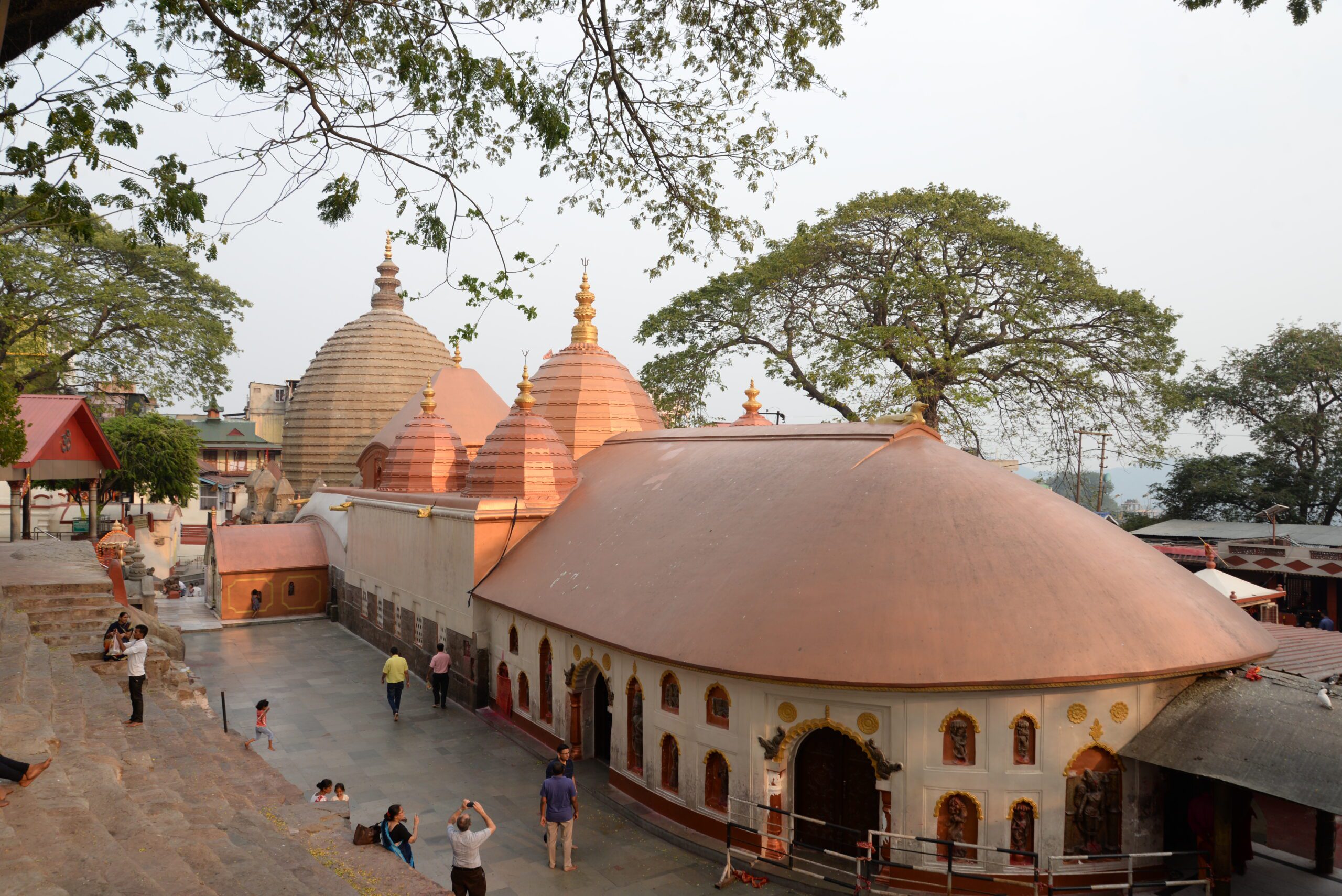
Kamakhya Temple is built in the distinctive Nilachal style of architecture, which is unique to Assam. The design combines traditional Assamese construction techniques with influences from North Indian temple architecture, creating a structure that is both grand and spiritually significant.
2. Unique Beehive-Shaped Dome
One of the most striking features of the temple is its large beehive-shaped dome. The ribbed shikhara (tower) rises above the sanctum and is crowned with a golden kalasha, making it a prominent landmark on Nilachal Hill.
3. Exterior Carvings and Sculptures
The outer walls of the temple are adorned with intricate carvings and sculptures depicting Hindu deities, celestial beings, floral patterns, animals, and scenes from mythology. These artistic details showcase the exceptional craftsmanship of ancient artisans.
4. Sanctum Sanctorum (Garbhagriha)
The sanctum of Kamakhya Temple is located below ground level. Devotees descend a series of stone steps to reach this sacred chamber, creating a unique and mystical spiritual experience.
5. Absence of a Traditional Idol
Unlike most Hindu temples, Kamakhya Temple does not contain an idol of the goddess. Instead, the main object of worship is a natural rock fissure that is continuously fed by an underground spring, symbolizing the creative power of Goddess Kamakhya.
6. Natamandira (Assembly Hall)
The temple includes a spacious Natamandira or assembly hall where devotees gather for prayers, religious discourses, and ceremonial rituals. This hall serves as an important space for worship and community gatherings.
7. Subsidiary Shrines
The temple complex houses several smaller shrines dedicated to different forms of Goddess Shakti and other Hindu deities. These shrines enhance the religious importance of the complex and attract pilgrims from across the country.
8. Influence of Tantric Traditions
The architectural layout of Kamakhya Temple reflects its strong association with Tantric worship. The design and symbolism of the temple emphasize the worship of divine feminine energy and make it one of the most important Tantric centers in India.
9. Building Materials and Construction
The temple is primarily constructed using stone and brick. The robust construction, combined with intricate detailing, has helped preserve the temple’s beauty and significance for centuries.
10. Hilltop Setting and Scenic Views
Situated atop Nilachal Hill, the temple enjoys a commanding location overlooking Guwahati city and the Brahmaputra River. The elevated setting enhances both the spiritual atmosphere and the architectural grandeur of the temple.
Architectural Significance
The unique dome, underground sanctum, artistic carvings, and spiritual symbolism make Kamakhya Temple one of the finest examples of Assamese temple architecture. Its design reflects centuries of religious devotion, cultural heritage, and architectural excellence.
Main Shrine and Sacred Sanctum
The most unique feature of Kamakhya Temple is that there is no idol of Goddess Kamakhya.
Instead, devotees worship a natural rock fissure continuously fed by an underground spring. This sacred rock is considered the physical manifestation of the goddess and represents the divine feminine principle.
Pilgrims descend a series of stone steps into the sanctum to offer prayers and receive blessings.
Ambubachi Mela: The Most Famous Festival
The Ambubachi Mela is the most important festival celebrated at Kamakhya Temple.
Held annually during the monsoon season in June, the festival marks the yearly menstruation cycle of Goddess Kamakhya. During this period, the temple remains closed for three days and reopens with grand celebrations. Lakhs of devotees, Tantric practitioners, sadhus, and tourists gather at the temple to participate in this unique spiritual event.
Highlights of Ambubachi Mela
- Gathering of Tantric saints and ascetics.
- Special rituals and prayers.
- Distribution of sacred cloth and blessed water.
- Cultural and spiritual activities.
- One of the largest religious gatherings in Northeast India.
Temple Timings
Time Activity
5:30 A.M Snana of the Pithasthana
6:00 A.M Nitya puja.
8:00 A.M Temple door open for devotees.
1:00 P.M Temple door closed for cooked offerings
2:30 P.M Temple door reopens for the devotees.
7:30 PM Aarati of Goddess.
Best Time to Visit Kamakhya Temple
October to March
This is considered the best time to visit because of the pleasant weather and comfortable sightseeing conditions.
June
Visit during Ambubachi Mela if you wish to witness one of India’s most unique religious festivals. However, expect large crowds during this period.
Places to Visit near Kamakhya Temple
A visit to Kamakhya Temple can be combined with several other attractions in and around Guwahati. From ancient temples and river islands to museums and wildlife parks, these nearby places offer a perfect blend of spirituality, history, culture, and natural beauty.
1. Umananda Temple
Located on Peacock Island in the middle of the Brahmaputra River, Umananda Temple is dedicated to Lord Shiva. It is one of the most picturesque religious sites in Guwahati and can be reached by a short ferry ride. The island offers stunning views of the river and the city skyline, making it a popular destination for both pilgrims and tourists.
2. Bhubaneswari Temple
Situated on the highest point of Nilachal Hill, Bhubaneswari Temple is located close to Kamakhya Temple. Dedicated to Goddess Bhubaneswari, the temple offers a peaceful atmosphere and breathtaking panoramic views of Guwahati city and the Brahmaputra River. It is an excellent spot for photography and meditation.
3. Navagraha Temple
The Navagraha Temple is one of the oldest temples in Assam and is dedicated to the nine celestial planets of Hindu astrology. Located on Chitrachal Hill, the temple attracts devotees seeking blessings to overcome astrological challenges and is known for its spiritual significance.
4. Assam State Museum
For travelers interested in history and culture, the Assam State Museum is a must-visit attraction. The museum houses an extensive collection of sculptures, ancient manuscripts, tribal artifacts, coins, textiles, and archaeological exhibits that showcase Assam’s rich heritage.
5. Brahmaputra River Cruise
A river cruise on the mighty Brahmaputra is one of the most enjoyable experiences in Guwahati. Visitors can enjoy scenic views, cultural performances, local cuisine, and spectacular sunsets while sailing along one of Asia’s largest rivers.
6. Assam State Zoo and Botanical Garden
Located in the Hengrabari Reserve Forest, this is the largest zoo in Northeast India. The zoo is home to various species of animals, birds, and reptiles, making it an ideal destination for families and nature lovers.
7. Basistha Temple
Dedicated to Sage Vashistha, this ancient temple is situated amidst lush green hills on the outskirts of Guwahati. The nearby streams, waterfalls, and serene surroundings create a peaceful environment for visitors seeking tranquility.
8. Dighalipukhuri
Dighalipukhuri is a historic man-made lake located in the heart of Guwahati. Surrounded by gardens and walking paths, it is a popular spot for boating, evening strolls, and relaxation.
9. Srimanta Sankardev Kalakshetra
This cultural complex is dedicated to the life and teachings of the great Assamese saint and reformer Srimanta Sankardev. It features museums, cultural galleries, traditional architecture, and performances that provide insight into Assam’s artistic and cultural traditions.
10. Pobitora Wildlife Sanctuary
Located about 50 kilometers from Guwahati, Pobitora Wildlife Sanctuary is famous for having one of the highest densities of one-horned rhinoceroses in India. Jeep safaris and birdwatching opportunities make it a favorite destination for wildlife enthusiasts.
11. Deepor Beel
Deepor Beel is a freshwater lake and a designated Ramsar wetland located near Guwahati. It is a paradise for birdwatchers and nature lovers, especially during the winter season when migratory birds arrive from different parts of the world.
12. Fancy Bazaar
For shopping enthusiasts, Fancy Bazaar is one of the busiest markets in Guwahati. Visitors can purchase traditional Assamese handicrafts, silk products, souvenirs, jewelry, and local snacks while experiencing the vibrant atmosphere of the city.
13. Kaziranga National Park
Although located a few hours from Guwahati, Kaziranga National Park is one of Assam’s most famous attractions. Known for its population of one-horned rhinoceroses and rich biodiversity, it is a UNESCO World Heritage Site and a must-visit destination for wildlife lovers.
How to Reach Kamakhya Devi Temple, Assam
Kamakhya Devi Temple is located on Nilachal Hill in Guwahati, Assam, and is well connected by air, rail, and road. As one of the most important pilgrimage sites in India, reaching the temple is convenient for visitors from all parts of the country.
1. By Air
The nearest airport is Lokpriya Gopinath Bordoloi International Airport, Guwahati, located about 20–21 kilometers from Kamakhya Temple. The airport has regular flights connecting Guwahati with major Indian cities such as Delhi, Mumbai, Kolkata, Bengaluru, Chennai, and Hyderabad.
After reaching the airport, visitors can hire a taxi, book an app-based cab, or use bus services to reach the temple. The journey usually takes 40–60 minutes depending on traffic conditions.
2. By Train
- Kamakhya Railway Station
Kamakhya Railway Station is the nearest railway station to the temple and is located approximately 5–8 kilometers away. It is well connected to major cities across India through regular train services. From the station, visitors can easily hire auto-rickshaws, taxis, or shared vehicles to reach the temple.
- Guwahati Railway Station
Guwahati Railway Station, the main railway hub of Assam, is located about 7–8 kilometers from the temple. Regular taxis, buses, and auto-rickshaws are available outside the station for convenient transportation to Nilachal Hill.
3. By Road
Guwahati is well connected with major cities and towns of Assam and neighboring states through a strong road network. Travelers can reach Guwahati by:
- State transport buses
- Private buses
- Tourist coaches
- Taxis and private vehicles
The main bus terminals serving Guwahati include ISBT Guwahati, Paltan Bazaar, and Adabari. From these locations, local buses, taxis, and shared vehicles are available to Kamakhya Temple.
Reaching the Temple from Guwahati City
Once in Guwahati, visitors have several options to reach the temple:
- Taxi or Cab
The most comfortable option is to hire a taxi or book an app-based cab directly to the temple entrance.
- Auto-Rickshaw
Auto-rickshaws are widely available throughout Guwahati and provide an economical way to reach the temple.
- Bus Service
Regular city buses operate towards Kamakhya Gate. From the gate, shared jeeps and local vehicles take visitors up Nilachal Hill to the temple complex.
- Trekking to the Temple
Devotees who prefer a traditional pilgrimage experience can climb the stone steps leading up Nilachal Hill. Many pilgrims choose this route as a mark of devotion while enjoying scenic views of Guwahati and the Brahmaputra River.
Travel Tips for Visiting Kamakhya Temple
Visiting Kamakhya Temple can be a spiritually enriching experience, especially if you plan your trip well. Here are some useful travel tips to make your visit comfortable and hassle-free.
1. Reach Early in the Morning
Arriving early is highly recommended, as the temple attracts a large number of devotees throughout the day. Early morning visits usually offer shorter queues and a more peaceful atmosphere for darshan.
2. Wear Modest and Comfortable Clothing
Since Kamakhya Temple is an important religious site, visitors should wear decent and respectful attire. Comfortable clothing and footwear are advisable, especially if you plan to walk around the temple complex.
3. Be Prepared for Long Queues
During weekends, holidays, Navratri, and the famous Ambubachi Mela, waiting times can be several hours. Carry water and be prepared for extended periods of standing.
4. Carry Essential Items
Keep the following items with you:
- Water bottle
- Personal medicines
- Mobile phone and charger
- Umbrella or raincoat during monsoon
- Small amount of cash for offerings and local transport
5. Avoid Carrying Heavy Luggage
Large bags and unnecessary luggage can make your visit inconvenient. Travel light for a smoother experience inside the temple complex.
6. Follow Temple Rules and Customs
Respect the temple’s traditions and instructions issued by temple authorities. Maintain silence and decorum while inside the sanctum and prayer areas.
7. Be Cautious During Peak Festivals
If you plan to visit during Ambubachi Mela, book your accommodation and transportation well in advance. Hotels and transport services are often fully booked during this period.
8. Stay Hydrated
Guwahati can be warm and humid, particularly during summer. Carry drinking water and stay hydrated throughout your visit.
9. Use Authorized Guides Only
If you require a guide, choose authorized or reputed local guides. Avoid dealing with unauthorized individuals who may overcharge visitors.
10. Plan Your Transportation
The temple is located on Nilachal Hill. Taxis, auto-rickshaws, and local buses are available from various parts of Guwahati. Plan your return journey in advance, especially if visiting during the evening.
Conclusion
Kamakhya Temple is not just one of the most revered Shakti Peethas in India but also a remarkable symbol of faith, spirituality, and cultural heritage. Perched atop the scenic Nilachal Hill in Guwahati, the temple attracts millions of devotees and travelers with its unique traditions, ancient history, and profound religious significance. From its distinctive architecture and sacred sanctum to the vibrant celebrations of Ambubachi Mela, every aspect of the temple offers a memorable and spiritually enriching experience.
Whether you are seeking divine blessings, exploring Assam’s rich heritage, or simply looking to witness one of India’s most unique pilgrimage sites, Kamakhya Temple promises an unforgettable journey. The peaceful surroundings, panoramic views of the Brahmaputra River, and deep spiritual atmosphere make it a destination that leaves a lasting impression on every visitor. A trip to Assam is truly incomplete without experiencing the divine aura and timeless charm of Kamakhya Temple.
(FAQs) About Kamakhya Temple, Assam
Why is Kamakhya Temple famous?
Kamakhya Temple is famous for being one of the 51 Shakti Peethas and a major center of Tantric worship. It is also renowned for the annual Ambubachi Mela, which attracts lakhs of devotees from across the country.
Who is the main deity worshipped at Kamakhya Temple?
The temple is dedicated to Goddess Kamakhya, a form of Goddess Shakti. Unlike most temples, there is no idol in the sanctum; devotees worship a sacred natural rock fissure representing the divine feminine energy.
What are the opening and closing timings of Kamakhya Temple?
The temple generally opens at 5:30 AM and remains open until around 7:30 PM, with a temporary closure in the afternoon for bhog offerings and rituals.
What is the best time to visit Kamakhya Temple?
The best time to visit is from October to March when the weather is pleasant. Those interested in experiencing the famous Ambubachi Mela can visit during June.
How can I reach Kamakhya Temple?
Visitors can reach the temple via Lokpriya Gopinath Bordoloi International Airport, Kamakhya Railway Station, or Guwahati Railway Station. Taxis, auto-rickshaws, and buses are readily available from the city.
What is Ambubachi Mela?
Ambubachi Mela is an annual religious festival celebrated at Kamakhya Temple in June. It marks the symbolic menstruation cycle of Goddess Kamakhya and is considered one of the most significant spiritual events in India.
Is there any dress code for visiting the temple?
There is no strict dress code, but visitors are advised to wear modest and respectful clothing suitable for a religious place.
Are photography and videography allowed inside the temple?
Photography may be allowed in certain areas of the temple complex, but it is generally prohibited inside the sanctum sanctorum. Visitors should follow the instructions of temple authorities.
What are some nearby attractions to visit along with Kamakhya Temple?
Popular nearby attractions include Umananda Temple, Bhubaneswari Temple, Navagraha Temple, Assam State Museum, Srimanta Sankardev Kalakshetra, Deepor Beel, and the Brahmaputra River Cruise.