
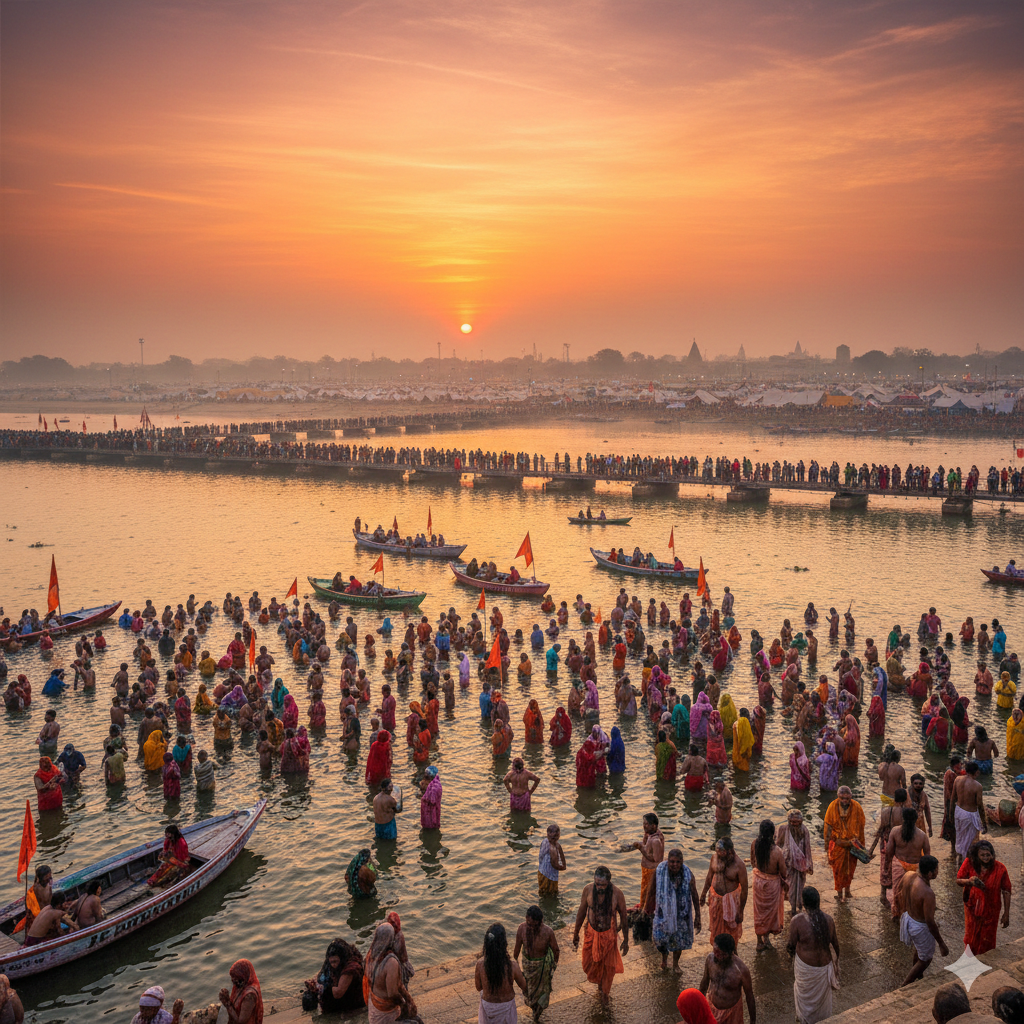
Magh Mela is one of the largest annual Hindu religious gatherings, held every year in Prayagraj (Allahabad), Uttar Pradesh, during the Hindu month of Magh (January–February). It is a sacred festival of faith, spirituality, and traditional rituals performed on the banks of the Triveni Sangam, where the Ganga, Yamuna, and the mystical Saraswati rivers meet.This annual spectacle transforms the riverfront into a grand spiritual township, drawing millions of pilgrims who come in search of purity, peace, and divine blessings.
Magh Mela is an annual holy fair where millions of devotees take ritual baths, offer prayers, perform austerities, and participate in religious ceremonies. It follows a centuries-old tradition and is considered a miniature version of the grand Kumbh Mela.
It is based on the belief that a bath in the sacred Sangam during the auspicious Magh month cleanses sins and brings spiritual merit.
The Spiritual & Historical Significance of Magh Mela
The Legend of the Nectar
The roots of the Magh Mela are found in the Puranas. According to Hindu mythology, during the Samudra Manthan (churning of the ocean), a few drops of Amrit (the nectar of immortality) fell at four places on Earth: Prayagraj, Haridwar, Nasik, and Ujjain. While the Maha Kumbh happens every 12 years, the Magh Mela is an annual celebration of this divine occurrence.
The Confluence: Triveni Sangam
The Magh Mela takes place at the Triveni Sangam, the confluence of:
- The Ganga: Representing purity and the physical cleansing of sins.
- The Yamuna: Representing devotion and depth.
- The Saraswati: The invisible, mythical river representing wisdom and enlightenment.
It is believed that a dip here during the month of Magh opens the doors to Vaikuntha (the abode of Lord Vishnu).
Magh Mela 2026 Date & Timing
The Magh Mela 2026 will begin on January 3, 2026, with the auspicious occasion of Paush Purnima, marking the commencement of the holy fair at the Triveni Sangam in Prayagraj. The festival will continue for approximately 44 days, concluding on February 15, 2026, on the sacred day of Mahashivratri. Throughout this extended period, millions of devotees are expected to participate in ritual baths, spiritual practices, religious discourses, and various cultural activities, making Magh Mela 2026 a significant and deeply spiritual event.
Important Dates for Magh Mela 2026
Timing is everything. The Magh Mela follows the Hindu lunar calendar. For 2026, the dates are as follows:
Paush Purnima (January 3, 2026)
This marks the official commencement of the mela. It is the day when the Kalpavasis (devotees who stay for the full month) begin their fast and rituals.
Makar Sankranti (January 14, 2026)
One of the most popular dates. It marks the transition of the Sun into the Northern Hemisphere (Uttarayana). People eat Khichdi and donate sesame seeds (Til) and jaggery.
Mauni Amavasya (January 18, 2026)
The Peak Day. It is believed that Rishabh Dev, the first Tirthankara, broke his long silence here. Devotees observe a “Maun Vrat” (vow of silence) and take the “Shahi Snan.” The crowds on this day are the largest.
Basant Panchami (January 23, 2026)
Dedicated to Goddess Saraswati. The mela grounds turn into a sea of yellow, as devotees wear yellow clothes and offer yellow flowers to the river.
Maghi Purnima (February 1, 2026)
The full moon day. It is said that on this day, all deities descend to the Sangam in human form. This is the day when the Kalpavas concludes.
Maha Shivratri (February 15, 2026)
The grand finale. Devotees offer prayers to Lord Shiva, the patron deity of Prayagraj. After this, the tent city begins to dismantle.
- January 3, 2026 – Paush Purnima (Opening & first holy bath)
- January 14–15, 2026 – Makar Sankranti (major snan day)
- January 18, 2026 – Mauni Amavasya (most significant snan)
- January 23, 2026 – Basant Panchami
- February 1, 2026 – Maghi Purnima
- February 15, 2026 – Mahashivratri (final holy bath & conclusion)
The Phenomenon of Kalpavas: A Spiritual Bootcamp
One cannot write about Magh Mela without mentioning Kalpavas. A Kalpavasi is someone who vows to live on the banks of the Ganga for the entire month of Magh.
The Rules of Kalpavas:
- Austerity: They sleep on the hard ground on straw mats.
- Diet: Only one meal a day, cooked by themselves using simple ingredients.
- Daily Routine: Three dips in the cold river water daily—at dawn, noon, and dusk.
- Detachment: No use of perfumes, luxury items, or harsh language.
For a traveler, witnessing the discipline of these thousands of Kalpavasis is a humbling experience. It represents the victory of spirit over material desires.
Difference between Kumbh Mela & Magh Mela
Kumbh Mela and Magh Mela are both important Hindu religious gatherings held at the Triveni Sangam in Prayagraj, but they differ significantly in scale, frequency, and purpose. Kumbh Mela is a grand spiritual event held once every 12 years, based on specific planetary alignments, and is considered one of the largest religious congregations in the world, attracting millions of devotees, saints, and tourists. In contrast, Magh Mela is an annual festival celebrated every year during the Hindu month of Magh (January–February) and is seen as a smaller, yearly version of Kumbh Mela. While Kumbh Mela is associated with the legendary story of Samudra Manthan and the divine nectar of immortality, Magh Mela focuses more on the tradition of Kalpavas, where devotees stay for a month practicing meditation, simplicity, and ritual bathing. Both melas hold great religious importance, but Kumbh Mela is far more massive and rare, whereas Magh Mela offers spiritual opportunities every year.
Activities to Perform in Magh Mela
- Take the holy bath (Snan) at the Triveni Sangam, considered the most sacred ritual of the Mela.
- Attend Ganga Aarti in the evening, offering prayers and witnessing the beautiful river worship ceremony.
- Participate in Kalpavas, a month-long spiritual practice involving meditation, fasting, and simple living (optional for those who choose).
- Join satsangs and kirtans, where saints and spiritual leaders share teachings and devotional music is performed.
- Witness Yajnas and Havans, performed by priests and devotees to seek divine blessings.
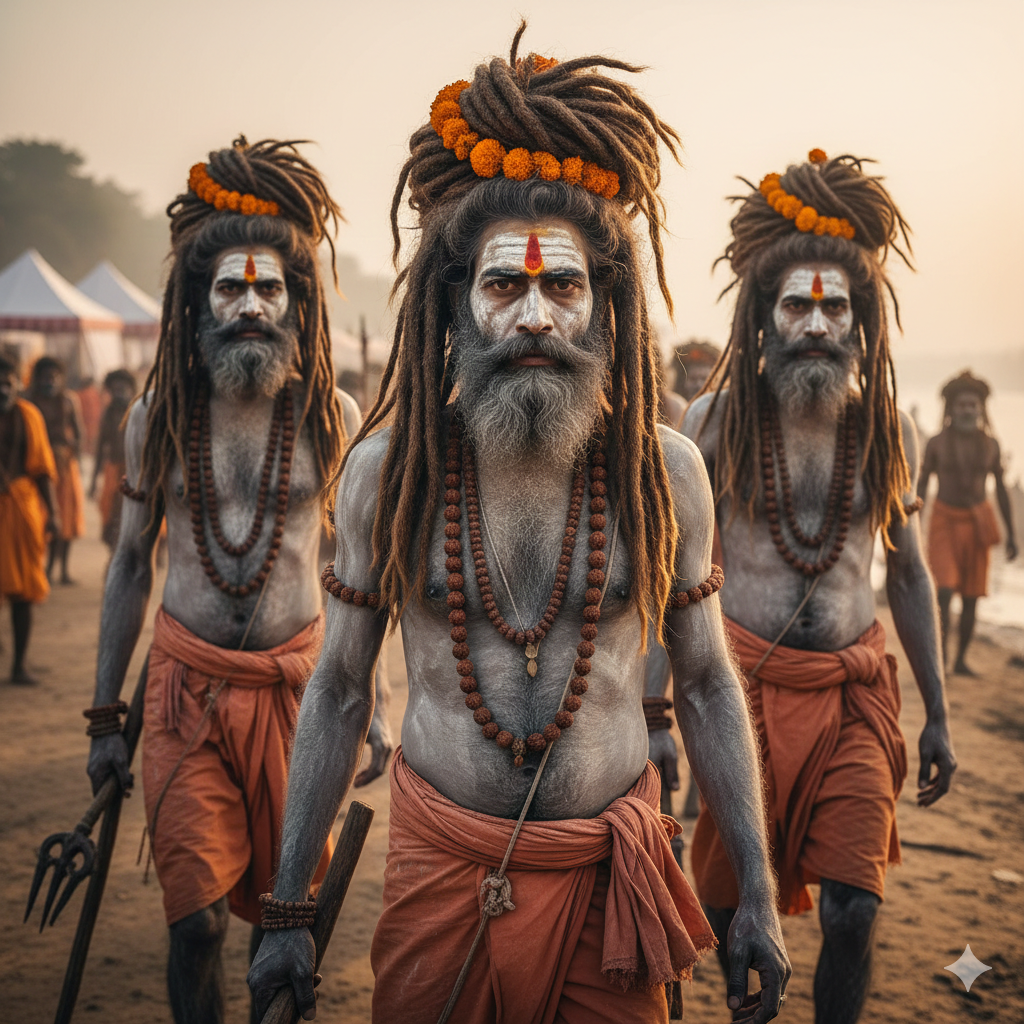
- Visit the camps of various Akharas to listen to spiritual discourses and learn about different traditions.
- Explore cultural programs, including folk music, dance, and traditional performances.
- Offer Annadaan (charity) by distributing food, clothes, or essentials to the needy.
- Visit nearby temples such as Bade Hanuman Ji Temple and Sri Akshayavat for blessings.
- Experience the Mela’s vibrant tent city, including stalls, exhibitions, spiritual books, and handicrafts.
Important Rules to Follow at Magh Mela
Visiting the Magh Mela involves participating in sacred rituals while ensuring safety, discipline, and respect for the sanctity of the place. Here are the essential rules every devotee and visitor should keep in mind:
1. Maintain Discipline and Follow Instructions
- Always follow directions given by police, volunteers, and Mela authorities.
- Walk only in designated pathways and avoid restricted areas.
2. Respect the Sanctity of the Sangam
- Do not pollute the river—avoid using soap or shampoo while bathing.
- Perform rituals respectfully without disturbing others.
3. Crowd Safety Rules
- Stick with your group and avoid overcrowded zones during peak snan moments.
- Cooperate with security checks and barricades.
4. Health & Hygiene Guidelines
- Drink only clean or bottled water.
- Wear warm clothing in early mornings (January–February is very cold).
- Avoid bathing in deep or unsafe areas—follow lifeguard instructions.
5. Rules for Kalpavasis
- Maintain purity, simplicity, and discipline throughout the stay.
- Abstain from intoxicants, non-veg food, and unnecessary social activity.
- Participate in daily snan, satsang, and spiritual practices regularly.
6. Personal Safety Rules
- Keep valuables safe; avoid carrying large amounts of cash.
- Use only authorized boats for Sangam travel.
- Keep emergency contact numbers handy.
7. Cleanliness & Environment Rules
- Do not litter—use dustbins provided at the Mela ground.
- Keep tents and surrounding areas clean.
8. Prohibited Items
- Weapons, sharp objects, firecrackers, and illegal substances.
- Alcohol, tobacco, and intoxicants are strictly banned.
9. Communication & Identity
- Carry an ID proof at all times.
- Keep your phone charged; use location-sharing if visiting with family.
10. Transport & Parking Rules
- Park only in authorized parking areas.
- Follow traffic plans issued by the administration for smooth movement.
How to Reach Magh Mela
Reaching the Magh Mela at Triveni Sangam, Prayagraj (Allahabad), Uttar Pradesh is convenient because the city is well-connected by road, rail, and air. During the Mela period, special transport arrangements and traffic plans are also put in place to help pilgrims reach the Sangam smoothly.
1. By Train (Most Convenient)
Prayagraj is a major railway hub with excellent connectivity to all major Indian cities.
Nearest Railway Stations:
- Prayagraj Junction (Allahabad Junction) – 6–8 km from Sangam
- Prayagraj Rambagh Station – 4–5 km from Sangam
- Prayagraj Sangam Station – very close to Mela area (best during Mela)
From the station, you can take:
- Auto-rickshaw
- E-rickshaw
- City bus
- Taxi
Special trains may also run during the Mela season.
2. By Air
The nearest airport is:
- Prayagraj Airport (Bamrauli Airport) – 12 km from Sangam
It has regular flights from:
- Delhi
- Mumbai
- Bangalore
- Kolkata
- Lucknow
From the airport, taxis and app-based cabs are easily available.
Nearby airports (if Prayagraj flights are full):
- Varanasi International Airport – 120 km
- Lucknow International Airport – 200 km
3. By Road
Prayagraj is well-linked with national and state highways.
Major road routes:
- From Varanasi – 120 km
- From Lucknow – 200 km
- From Kanpur – 190 km
- From Delhi – 650 km
Frequent UPSRTC buses, private buses, and tourist coaches operate to Prayagraj.
During the Mela, dedicated shuttle buses may run between:
- Bus stands
- Railway stations
- Mela gates
4. Local Transport to the Mela Area
From anywhere in Prayagraj city, you can reach the Magh Mela using:
- E-rickshaws
- Autos
- Cycle rickshaws
- City buses
- Shuttle buses provided by authorities
Parking areas are usually set up outside the main Mela zone, and the remaining distance may have to be covered by walking or shuttle services.
5. Routes to the Sangam (Mela Ground)
- Main entry points include:
- Nagvasuki Area
- Jhunsi Entry Gate
- Arail Ghat Side (via new bridge)
- Rani Mandi Route
Conclusion: Why You Must Visit in 2026
The Magh Mela 2026 is more than a religious event; it is a testament to India’s living heritage. It is where the modern world pauses to respect ancient traditions. Whether you are a devotee seeking merit, a photographer seeking the perfect shot, or a traveler seeking yourself, the sands of Prayagraj have something for everyone.
Plan your spiritual journey with ApnaYatra.com. We provide curated guides, hotel bookings, and the latest updates on all major Indian pilgrimages.
FAQs Magh Mela 2026
To help you plan your journey seamlessly, we have answered the most common queries regarding the Magh Mela in Prayagraj.
Is Magh Mela the same as Kumbh Mela?
No. While they happen at the same location (Prayagraj), the Magh Mela is an annual event held every year. The Kumbh Mela is held every 6 years (Ardh Kumbh) and 12 years (Maha Kumbh). Magh Mela is slightly smaller in scale but follows similar spiritual rituals.
Do I need to book entry tickets for the Mela?
No, entry to the Magh Mela grounds and the holy dip at Sangam is free for everyone. However, you will need to pay for specific services like boat rides, private tent stays, or specialized tours.
How can I participate in Kalpavas?
To be a Kalpavasi, you typically need to stay in the mela area for the entire 30-day lunar month. You can contact various Ashrams or Religious Organizations that set up camps. They provide basic thatched huts or tents for devotees who vow to follow the strict daily rituals.
What is the best way to reach the Sangam for the holy dip?
The best way is to reach the Prayagraj Junction or the Mela Bus Stand and then walk or take an e-rickshaw to the nearest Mela Sector. From the banks, you can hire a registered wooden boat to take you to the exact point of the Sangam (the confluence).
Is it safe for international tourists?
Yes, the Magh Mela is very safe. The Uttar Pradesh Police sets up dozens of temporary police stations and "Lost and Found" centers (Bhula Bhatka Shivir). For a more comfortable experience, international tourists are advised to stay in Luxury Swiss Tents.
What should I wear during the Mela?
- For the Weather: It is extremely cold in January. Carry heavy woolens, thermals, and caps.
- For the Ritual: While bathing, men usually wear dhoti or shorts, and women wear sarees or suits. It is advised to carry a spare set of dry clothes and a towel in a waterproof bag.
Are there medical facilities available?
Yes, the government sets up a multi-bed temporary hospital within the mela grounds with 24/7 emergency services, ambulances, and basic medicine counters.
Can I take photographs and fly drones?
General photography is allowed and welcomed. However, flying drones is strictly prohibited without prior written permission from the Mela Administration and Local Police due to security reasons. Always respect the privacy of devotees, especially at the bathing ghats.
Where should I stay: Hotels or Tents?
- Hotels: Choose a hotel in the city (Civil Lines or Chowk) if you want standard comfort and easy access to markets.
- Tents: Stay in the Mela Tents if you want to experience the spiritual atmosphere 24/7. Tents range from basic dormitories to high-end luxury cottages.