
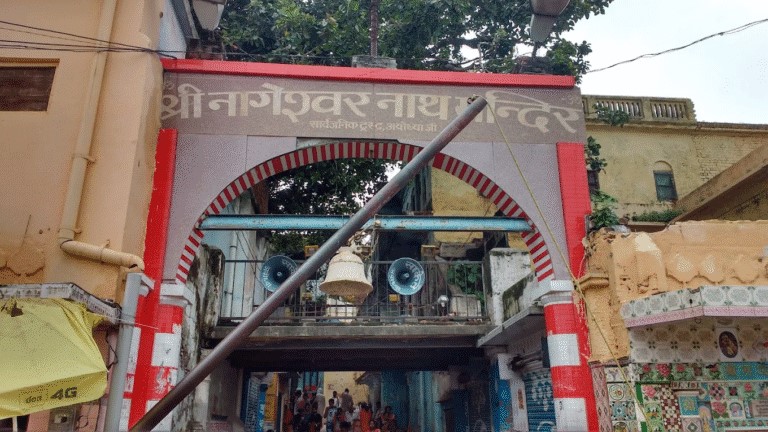
Ayodhya, the sacred city associated with Lord Rama, is home to many ancient temples that hold immense spiritual and historical importance. Among these revered shrines, the Nageshwarnath Temple stands out as one of the oldest and most significant temples in Ayodhya. Dedicated to Lord Shiva, this temple is deeply connected with the Ramayana era and continues to attract thousands of devotees every year.
Located near the famous Ram Ki Paidi and close to the Saryu River, Nageshwarnath Temple is a must-visit destination for pilgrims seeking divine blessings and a glimpse into Ayodhya’s timeless heritage.
Nageshwarnath Temple Darshan Timings
The temple generally remains open daily. Timings may vary slightly during festivals and special occasions.
- Morning: 5:00 AM to 12:00 PM
- Evening: 4:00 PM to 9:00 PM
Early morning darshan is considered highly auspicious.
Aarti Timings at Nageshwarnath Temple
Daily aartis are performed with great devotion.
- Mangala Aarti – Early Morning ( 5:00 AM to 6:00 AM)
- Sandhya Aarti – Evening( 8:00 PM to 8:30 PM)
- Special Aarti during Shivratri and Shravan Mondays
Visitors should arrive early during festivals due to heavy crowds.
History of Nageshwarnath Temple
The history of Nageshwarnath Temple dates back to the Treta Yuga and is linked to Kush, the son of Lord Rama. According to legend, Kush once lost his armlet while bathing in the Saryu River. A Nag Kanya (serpent princess) found it and returned it to him. She was an ardent devotee of Lord Shiva. Impressed by her devotion, Kush built this temple in honor of Lord Shiva and named it Nageshwarnath, meaning “Lord of Serpents.”
It is believed that this temple survived through centuries, even when many ancient structures of Ayodhya were lost with time. Later, the temple was renovated by various rulers and devotees.
Religious Significance of Nageshwarnath Temple
Nageshwarnath Temple holds a special place in the spiritual map of Ayodhya. While Ayodhya is mainly known as the city of Lord Rama and Vishnu worship, this temple symbolizes the harmonious devotion of Shaivism and Vaishnavism.
Devotees believe that:
- Worshipping Lord Shiva here fulfills wishes and removes obstacles.
- Offering prayers at Nageshwarnath Temple grants peace and prosperity.
- Visiting this temple during Shravan month and Mahashivratri brings special blessings.
- The temple protects devotees from negative energies and fears.
The temple is especially crowded during Mondays of Shravan month, Mahashivratri, and Nag Panchami.
Mythological Importance of Nageshwarnath Temple
The mythological roots of the temple make it one of Ayodhya’s most unique shrines. Since the temple was established by Kush, son of Lord Rama, it represents the continuation of the Ikshvaku dynasty’s devotion.
Another popular belief says that when Vikramaditya came to rediscover Ayodhya, this temple was one of the surviving landmarks that helped identify the sacred city.
Thus, Nageshwarnath Temple is not only a Shiva shrine but also an important reminder of Ayodhya’s Ramayana heritage.
Architecture of Nageshwarnath Temple
The Nageshwarnath Temple in Ayodhya reflects a beautiful blend of traditional North Indian temple architecture and later-period renovations. Though the temple is ancient in origin, much of its present structure has been restored over time, giving it a mix of historical charm and devotional grandeur.
The temple features a prominent shikhara (spire) rising above the sanctum, which is visible from the surrounding streets and serves as a spiritual landmark for devotees. The entrance is decorated with colorful carvings, religious motifs, and sculpted figures associated with Lord Shiva.
Inside the temple, the garbhagriha (sanctum sanctorum) houses the sacred Shivling of Nageshwarnath Mahadev, where devotees offer water, milk, and belpatra. The sanctum creates a peaceful and deeply spiritual atmosphere.
The temple walls and pillars are adorned with paintings, floral patterns, and images of Hindu deities, especially Lord Shiva, Goddess Parvati, Lord Ganesha, and serpent symbols representing the name “Nageshwar.” The use of bright colors and devotional artwork adds to the sacred ambiance.
A spacious courtyard allows devotees to gather during festivals like Mahashivratri and Shravan month. Bells, lamps, and traditional decorative elements further enhance the temple’s divine setting.
Overall, the architecture of Nageshwarnath Temple may not be massive in scale, but its spiritual aura, symbolic design, and historical importance make it one of Ayodhya’s most cherished sacred shrines.
Main Deity and Worship
The presiding deity of the temple is Lord Shiva in the form of Nageshwarnath Mahadev. Devotees offer:
- Water and milk abhishek
- Belpatra leaves
- Flowers and fruits
- Rudraksha malas
- Prayers for health, success, and family well-being
Chanting “Om Namah Shivaya” fills the temple atmosphere with devotion.
Best Time to Visit Nageshwarnath Temple
The temple can be visited throughout the year, but the most favorable times are:
1. October to March
Pleasant weather for sightseeing and pilgrimage.
2. Shravan Month (July–August)
Best for Shiva devotees, with grand celebrations.
3. Mahashivratri
The most important festival here, with special pujas and all-night worship.
Best Places to Eat Near Nageshwarnath Temple
Closest Options (Walking Distance)
1. Ramanand Restaurant and Guest house
Very close to the temple near Ram Ki Paidi. Convenient for a quick meal after darshan. Good for simple North Indian food and tea. Currently marked temporarily closed, so check locally first.
2. Radha Ratna Restaurant and Rooms
Near Lata Mangeshkar Chowk and accessible from temple area. Suitable for families and travelers wanting a sit-down meal.
Popular Restaurants Nearby (Short Auto Ride)
1. Dalmia’s Saffron Vatika Restaurant – Best restaurant/Best veg/Best Family restaurant in Ayodhya
One of the better-rated family dining options in Ayodhya. Good for comfortable seating and a fuller lunch or dinner. Also recommended in local discussions.
2. Udupi Ayodhya food palace
Great if you want South Indian dishes like dosa, idli, and thali. Reliable family option on Ram Path.
3. AWADH KA SWAAD
Good stop for North Indian vegetarian meals and snacks, close to Ram Mandir side.
4. Chandra Marwadi – Best Restaurant/Best Veg/Bhojnalaya/Best Family Restaurant in Ayodhya
Popular bhojnalaya-style option near Hanuman Garhi / Janmabhoomi path. Good if you want traditional veg meals.
How to Reach Nageshwarnath Temple Ayodhya
Nageshwarnath Temple is centrally located in Ayodhya and easily accessible.
1. By Air:
Nearest airport is Maharishi Valmiki International Airport Ayodhya, around 10–15 km away.
2. By Train:
Nearest railway stations:
- Ayodhya Dham Junction
- Ayodhya Cantt Railway Station
From the station, taxis and auto-rickshaws are easily available.
3. By Road:
Ayodhya is well connected by road to Lucknow, Varanasi, Prayagraj, and Gorakhpur.
4. Local Transport:
Use e-rickshaws, autos, or walk from Ram Ki Paidi and Hanuman Garhi area.
Why You Must Visit Nageshwarnath Temple
Nageshwarnath Temple offers a rare blend of Shiva devotion within the holy city of Lord Rama. Its connection to Kush, ancient legends, and spiritual atmosphere make it one of the most meaningful places in Ayodhya. Whether you are a pilgrim, history lover, or traveler, this temple gives a deep sense of peace and devotion.
Conclusion
The Nageshwarnath Temple Ayodhya is not just an ancient shrine—it is a living symbol of faith, mythology, and divine grace. Revered by devotees for centuries, the temple continues to bless visitors with spiritual serenity. If you are planning an Ayodhya pilgrimage, make sure to include Nageshwarnath Temple in your journey.