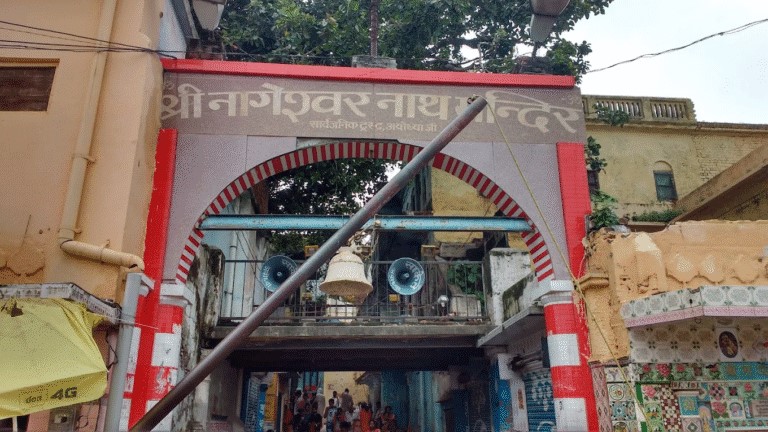
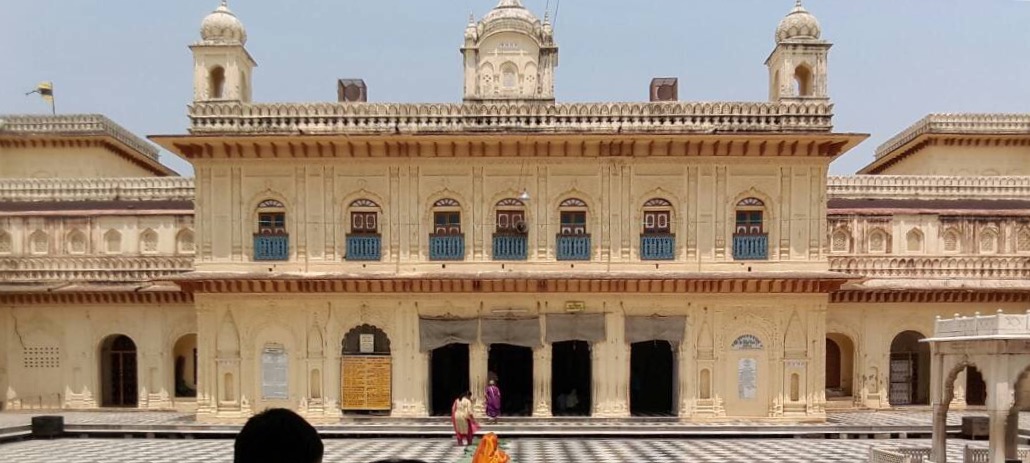
Nestled in the sacred city of Ayodhya, Kanak Bhawan is one of the most beautiful and spiritually significant temples dedicated to Lord Rama and Goddess Sita. Known as the “Golden Palace,” this temple is not just an architectural marvel but also a symbol of eternal love and devotion.
Aarti & Darshan Timings
Kanak Bhawan remains open daily for devotees. The timings may vary slightly with seasons:
1. Darshan Timings:
- Morning: 8:00 AM – 11:00 AM
- Evening: 4:30 PM – 9:00 PM
2. Aarti Timings:
- Morning Aarti: Around 8:30 AM
- Evening Aarti: Around 7:00 PM
History of Kanak Bhawan
Kanak Bhawan is believed to have been gifted to Goddess Sita by Kaikeyi, the stepmother of Lord Rama, after her marriage. This divine gift symbolized acceptance, love, and blessings for the newlyweds. Kanak Bhawan is one of the most revered temples associated with Lord Rama and Goddess Sita. Its history is a fascinating blend of mythology, royal patronage, and architectural revival.
1. Mythological Origins
- The origin of Kanak Bhawan is deeply rooted in the epic Ramayana.
- It is believed that the palace was gifted to Goddess Sita by Kaikeyi after her marriage to Lord Rama.
- The gift symbolized love, acceptance, and blessings for the newlyweds.
- Because of its golden appearance and grandeur, it came to be known as “Kanak Bhawan” (Golden Palace).
2. Early Reconstructions
According to traditional beliefs:
- The original structure did not survive the passage of time
- It is said that Kush, the son of Lord Rama, rebuilt the palace in ancient times.
- Later, the temple was renovated and maintained by various rulers who wished to preserve its sanctity.
- These early reconstructions helped keep the site spiritually active across generations.
3. Revival by Ancient Kings
The temple is often associated with the legendary king Vikramaditya, who is believed to have restored many important religious sites in Ayodhya.
During his reign:
- The temple regained prominence
- Idols of Rama and Sita were reinstalled
- The site became an important pilgrimage destination once again
4. Period of Decline
- Over centuries, due to invasions and political instability, the temple suffered damage and neglect.
- The structure reportedly fell into ruins, and its former glory faded for a period of time.
5. Modern Reconstruction (19th Century)
- The present form of Kanak Bhawan is the result of a major reconstruction:
- Rebuilt in 1891 by Queen Vrish Bhanu Kunwari of Tikamgarh (Bundelkhand region).
- She transformed the site into a magnificent palace-style temple.
Key contributions during this phase:
- Complete rebuilding of the temple complex
- Introduction of ornate architecture with domes, arches, and courtyards
- Installation of beautifully adorned idols of Lord Rama and Goddess Sita
Architecture of Kanak Bhawan
Located in the sacred city of Ayodhya, Kanak Bhawan is one of the most elegant temple complexes dedicated to Lord Rama and Goddess Sita. Its architecture beautifully blends palatial grandeur with devotional aesthetics, making it unique among North Indian temples.
1. Palace-Style Temple Design
Unlike traditional temple structures, Kanak Bhawan is designed more like a royal palace (bhawan) than a typical mandir.
- The temple resembles a Rajput-Bundela palace complex
- Spacious courtyards and residential-style layout
- Symmetrical design reflecting royal architecture
2. Influence of Bundela & Rajasthani Architecture
The present structure, rebuilt in the 19th century, shows strong influence of:
- Bundela architecture (from central India)
- Rajasthani style elements
Key features include:
- Multi-arched gateways
- Jharokhas (overhanging enclosed balconies)
- Decorative domes and chhatris
- Intricate lattice (jaali) work
These elements give the temple a majestic yet delicate appearance.
3. Ornate Interiors and Decorations
The interiors of Kanak Bhawan are richly decorated:
- Walls adorned with colorful paintings and carvings
- Use of golden embellishments, giving the temple its name (“Kanak” = gold)
- Beautifully designed ceilings with artistic patterns
The sanctum (garbhagriha) is especially mesmerizing with its divine aura.
4. Courtyard-Centric Layout
Kanak Bhawan follows a courtyard-based architectural plan:
- A large central courtyard for gatherings and rituals
- Surrounding corridors for devotees
- Open space ensures ventilation and natural light
This layout enhances both spiritual experience and crowd management.
Religious Significance of Kanak Bhawan
Kanak Bhawan is one of the most sacred temples dedicated to Lord Rama and Goddess Sita. Beyond its architectural beauty, the temple holds deep spiritual and emotional significance for millions of devotees.
1. Symbol of Divine Love and Marriage
Kanak Bhawan is believed to be the gift given to Goddess Sita by Kaikeyi after her marriage to Lord Rama, as described in the Ramayana.
- The temple is seen as a symbol of ideal marital love
- Devotees pray here for happy and harmonious relationships
- Newly married couples often visit to seek blessings
2. Sacred Abode of Rama and Sita
Unlike many temples that emphasize the divine power of deities, Kanak Bhawan highlights:
- The human and royal life of Lord Rama and Goddess Sita
- Their role as ideal husband and wife
- The presence of beautifully adorned idols creates a feeling of being in their royal residence, making the devotion more personal and emotional.
3. Fulfillment of Wishes
Devotees believe that prayers offered at Kanak Bhawan:
- Bring peace, prosperity, and happiness
- Help in resolving family and marital issues
- Fulfill heartfelt desires with divine blessings
This belief makes the temple a powerful place for faith and hope.
4. Center of Devotional Practices
Kanak Bhawan is a vibrant hub of religious activities:
- Daily aarti and bhajans create a spiritual atmosphere
- Continuous chanting of “Ram Naam” enhances devotion
- Devotees participate in rituals with deep श्रद्धा (faith)
The temple resonates with divine energy and भक्तिभाव (devotional spirit).
5. Festivals Celebrated at Kanak Bhawan
The temple comes alive during major Hindu festivals:
- Ram Navami – Celebrating the birth of Lord Rama
- Diwali – Marking Rama’s return to Ayodhya
- Vivah Panchami – Celebrating the divine wedding of Rama and Sita
During these occasions, the temple is beautifully decorated, and special rituals are performed.
How to reach Kanak Bhawan
Kanak Bhawan, located in the heart of Ayodhya, is easily accessible by air, rail, and road. Here’s a complete travel guide:
1. By Air
- The nearest airport is Maharishi Valmiki International Airport (Ayodhya Airport).
- It is about 8–10 km from Kanak Bhawan.
- From the airport, you can hire:
- Taxi
- Auto-rickshaw
Travel time: 20–30 minute
2. By Train
- The nearest railway station is Ayodhya Dham Junction.
- Another nearby station is Faizabad Cantt
From the station:
- Take an auto, e-rickshaw, or taxi
- Distance to Kanak Bhawan: 2–4 km
Travel time: 10–15 minutes
3. By Road
Ayodhya is well connected to major cities:
- From Lucknow (≈135 km)
- From Varanasi (≈220 km)
- From Prayagraj (≈170 km)
You can travel via:
- UPSRTC buses
- Private buses
- Taxi or self-drive
4. Last Route to Temple
Kanak Bhawan is located near Ram Janmabhoomi.
- Vehicles are usually not allowed very close to the temple
- You may need to walk 5–10 minutes from the nearest drop-off point
- E-rickshaws are available up to a certain distance
Travel Tips:
- Visit early morning or evening to avoid heavy crowds.
- Keep light luggage (walking required).
- Follow local security guidelines near Ram Janmabhoomi area.
- Use e-rickshaws for easy local travel.