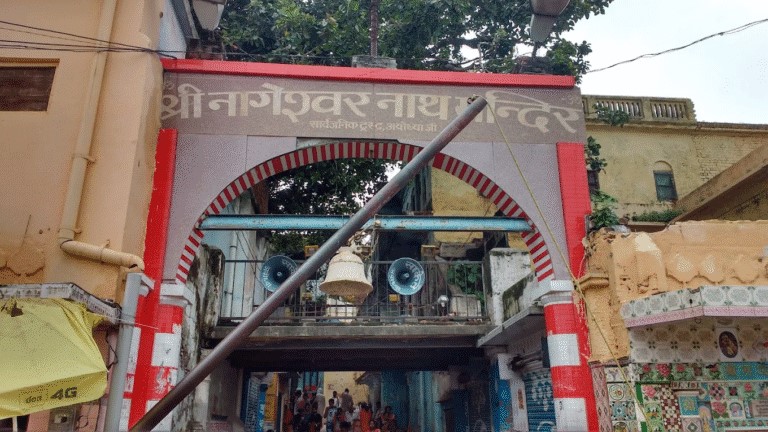
In the sacred city of Ayodhya, every street echoes with devotion, mythology, and history. Among its many revered landmarks, Dashrath Mahal holds a special place in the hearts of devotees. Believed to be the royal residence of King Dashrath, the father of Lord Ram, this grand palace is one of the most visited spiritual attractions in Ayodhya. It is considered the place where Lord Ram spent his childhood and where the royal family of the Ikshvaku dynasty once lived.
Today, Dashrath Mahal is not only a religious site but also a symbol of Ayodhya’s glorious past, attracting thousands of pilgrims and tourists throughout the year.
Darshan Timings at Dashrath Mahal
Morning Darshan – 6:00 AM – 12:00 PM
Evening Darshan- 4:00 PM – 10:00 PM
Aarti Timings at Dashrath Mahal
- Mangala Aarti – 6:30 AM
- Shringar Aarti – 8:00 AM
- Sandhya Aarti – 7:00 PM
- Shayan Aarti – 9:00 PM
Timings can change on special occasions.
History of Dashrath Mahal
Dashrath Mahal is associated with the ancient kingdom of Kosala, ruled by King Dashrath, a noble and righteous ruler from the Suryavanshi dynasty. According to the Ramayana, King Dashrath had three queens—Kaushalya, Kaikeyi, and Sumitra—and four sons: Ram, Bharat, Lakshman, and Shatrughna.
It is believed that this palace was the royal home where:
- Lord Ram was raised.
- The princes received their education.
- Important royal ceremonies were held.
- Preparations for Lord Ram’s coronation took place.
- The sorrowful exile of Lord Ram began.
Although the original palace dates back to ancient times, the present structure has undergone multiple renovations over the centuries. It is now maintained as a sacred temple-palace complex.
Religious Significance of Dashrath Mahal
Dashrath Mahal is considered one of the most important sites in Ayodhya because of its close connection to Lord Ram’s early life.
Devotees believe visiting Dashrath Mahal offers blessings of:
- Family harmony
- Peace and prosperity
- Devotion to Lord Ram
- Spiritual strength
- Fulfillment of wishes
For Ram devotees, stepping inside Dashrath Mahal feels like entering the divine home of Lord Ram.
Architecture of Dashrath Mahal
The architecture of Dashrath Mahal in Ayodhya reflects a beautiful blend of royal grandeur, traditional North Indian temple style, and devotional aesthetics. Though associated with the ancient palace of King Dashrath from the Ramayana era, the present structure has been renovated and restored over time, giving it a vibrant temple-palace appearance rather than an archaeological monument.
The entrance of Dashrath Mahal is grand and eye-catching, decorated with colourful gates, ornamental arches, and intricate carvings that immediately create a royal impression. The palace façade is painted in bright shades such as yellow, orange, white, and red, symbolizing joy, celebration, and spirituality.
Inside the complex, visitors can see spacious courtyards, beautifully designed halls, and richly decorated sanctums. The walls and ceilings often feature mirror work, floral motifs, traditional paintings, and artistic patterns that enhance the palace’s majestic atmosphere. Decorative pillars and carved balconies further add elegance to the structure.
The inner sanctum houses beautifully adorned idols of Lord Ram, Sita, Lakshman, Bharat, Shatrughna, and King Dashrath. These deities are dressed in royal garments and ornaments, emphasizing the palace’s regal identity.
One of the most striking features of Dashrath Mahal is its festive appearance. During religious occasions, the palace is illuminated with lights, flowers, and colourful decorations, making the architecture appear even more magnificent.
Overall, the architecture of Dashrath Mahal is not just about physical design—it represents devotion, royalty, and the timeless glory of Ayodhya’s sacred heritage.
Main Deities Worshipped at Dashrath Mahal
Inside Dashrath Mahal, devotees can seek blessings from:
- Lord Ram
- Mata Sita
- Lakshman Ji
- Bharat Ji
- Shatrughna Ji
- King Dashrath
- Hanuman Ji
The idols are dressed beautifully in royal attire, making the darshan truly divine.
Spiritual Experience at Dashrath Mahal
Dashrath Mahal offers more than just sightseeing. The moment you enter, the sound of Ram naam, devotional music, and vibrant colors create a sacred atmosphere. Devotees often feel emotional imagining the childhood days of Lord Ram spent here.
It is a place where history, mythology, and faith beautifully come together.
Major Festivals Celebrated at Dashrath Mahal
1. Ram Navami
The birth celebration of Lord Ram is celebrated with grand decorations, bhajans, and huge crowds.
2. Diwali / Deepotsav
The palace shines with lamps and lights, recreating the joy of Lord Ram’s return to Ayodhya.
3. Vivah Panchami
Celebrates the divine marriage of Ram and Sita.
4. Kartik Purnima
A spiritually significant occasion with special worship.
5. Ram Barat Procession
Colourful royal processions pass through Ayodhya with great enthusiasm.
What to Explore at Dashrath Mahal
- During your visit, do not miss:
- Main royal darbar of Lord Ram
- Beautifully decorated idols
- Ancient-style gates and courtyards
- Bhajan and kirtan sessions
- Local markets around the palace
- Nearby temples and ghats
Best Time to Visit Dashrath Mahal
The ideal months are:
- October to March – Pleasant weather for sightseeing
- Ram Navami season – Best for spiritual celebration
- Diwali / Deepotsav – Grand festive beauty
Summer can be hot, so early morning visits are better.
Travel Tips for Visitors
- Wear modest and respectful clothing
- Remove footwear before entering
- Keep valuables safe during crowded festivals
- Visit early morning for peaceful darshan
- Carry water in summer
- Respect temple rules and photography restriction
How to Reach Dashrath Mahal
1. By Air
Nearest airport: Maharishi Valmiki International Airport Ayodhya
2. By Train
Nearest railway stations:
- Ayodhya Dham Junction
- Ayodhya Cantt Railway Station
3. By Road
Ayodhya is well connected to Lucknow, Prayagraj, Varanasi, and Gorakhpur.
4. Local Transport
Auto-rickshaws, e-rickshaws, taxis, and walking routes are easily available.
Conclusion
Dashrath Mahal is one of Ayodhya’s most cherished landmarks, representing the royal heritage of Lord Ram’s family. Whether you are a devotee, history enthusiast, or traveler, visiting this sacred palace offers peace, devotion, and a deep connection to the Ramayana.
A journey to Ayodhya remains incomplete without seeking blessings at Dashrath Mahal.