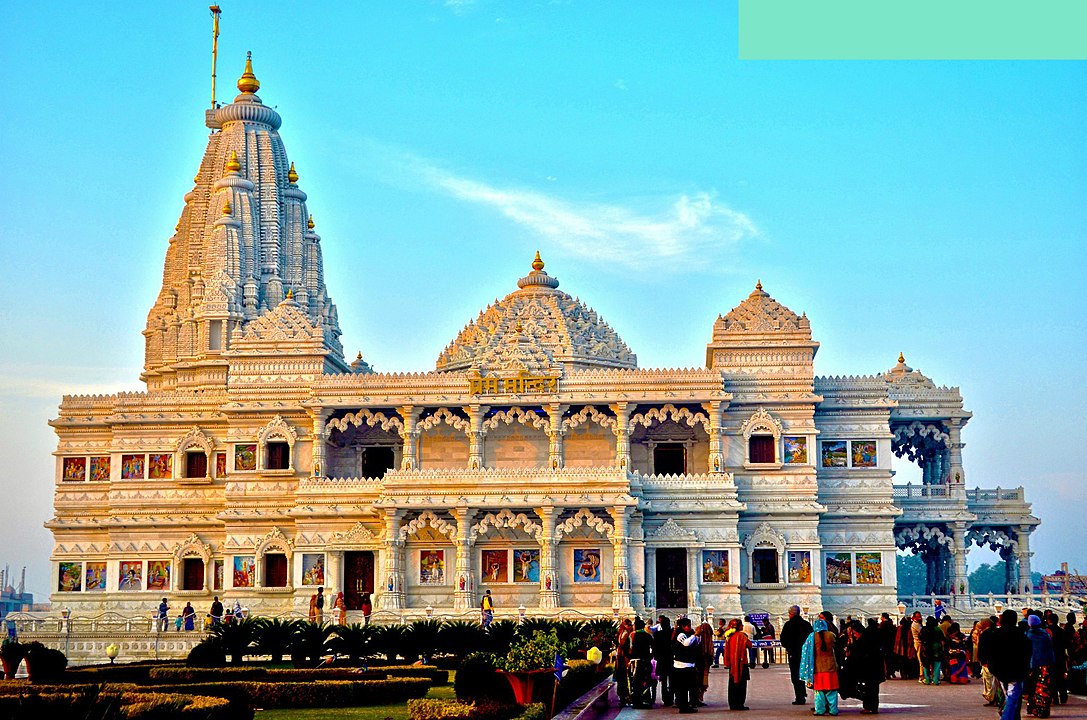
Vrindavan, the sacred land of Lord Krishna, is one of the most revered pilgrimage destinations in India. Located in the Mathura district of Uttar Pradesh, this holy town is believed to be the place where Lord Krishna spent His childhood and performed many of His divine pastimes. Every year, millions of devotees, pilgrims, and tourists from across the world visit Vrindavan to experience its spiritual atmosphere, ancient temples, devotional music, and vibrant festivals. While the town is renowned for iconic temples like Banke Bihari Temple, Prem Mandir, ISKCON Temple, and Radha Raman Temple, it is also home to one of the most ambitious modern temple projects in the world—Vrindavan Chandrodaya Mandir.
Vrindavan Chandrodaya Mandir is envisioned as a magnificent spiritual and cultural landmark that celebrates the life, teachings, and divine pastimes of Lord Krishna. Once completed, it is expected to become the world’s tallest religious monument, reaching an impressive height of approximately 700 feet (213 meters). However, this temple is much more than a towering architectural achievement. It has been thoughtfully designed to offer visitors a complete spiritual experience through worship, meditation, cultural exhibitions, educational displays, and beautifully landscaped gardens inspired by the sacred forests of Braj.
The temple combines traditional Indian temple architecture with modern engineering, creating a unique blend of heritage and innovation. Its expansive campus will feature prayer halls, interactive galleries, viewing decks, devotional theaters, museums, gardens, and facilities for pilgrims, making it a destination that appeals to both devotees and travelers. Whether you are seeking spiritual peace, interested in remarkable architecture, or exploring the rich cultural heritage of Vrindavan, Vrindavan Chandrodaya Mandir promises an unforgettable experience. This guide covers everything you need to know about the temple, including its history, architecture, significance, visitor information, and travel tips to help you plan a meaningful visit.
Why Was Vrindavan Chandrodaya Mandir Built?
Vrindavan Chandrodaya Mandir was envisioned with the goal of preserving and promoting the spiritual heritage of Vrindavan while presenting Lord Krishna’s teachings in a way that resonates with modern generations. The temple aims to create a place where people from every part of the world can experience the philosophy of Bhakti Yoga, understand the significance of Krishna’s pastimes, and appreciate India’s rich cultural traditions.
The project is not limited to constructing a magnificent temple; it also seeks to establish a global center for spiritual learning, cultural exchange, and devotional practices. Through educational exhibitions, museums, cultural performances, and interactive storytelling, visitors can gain a deeper understanding of the values taught in the Bhagavad Gita and Srimad Bhagavatam. The temple also emphasizes environmental conservation, community welfare, and the preservation of Braj’s sacred heritage.
Vision behind the Temple
The vision of Vrindavan Chandrodaya Mandir extends beyond creating a religious monument. It seeks to become a symbol of faith, peace, and cultural excellence while welcoming visitors from all backgrounds.
The temple has been planned to:
- Promote Krishna consciousness across the world.
- Preserve the spiritual and cultural traditions of Braj.
- Inspire younger generations through interactive learning.
- Provide a peaceful environment for meditation and devotion.
- Encourage spiritual tourism in Vrindavan.
- Create employment opportunities through tourism and hospitality.
- Serve as a cultural hub for devotional music, dance, literature, and festivals.
What Makes Vrindavan Chandrodaya Mandir Unique?
Several features distinguish this temple from other pilgrimage destinations in India.
1. World’s Tallest Religious Monument
Once completed, the temple is expected to become the tallest religious monument in the world, making it a significant architectural achievement.
2. Blend of Tradition and Technology
Traditional temple architecture has been combined with modern engineering techniques, creating a structure that is both visually magnificent and technologically advanced.
3. Spiritual Learning Experience
Rather than being only a place of worship, the temple has been designed as a center where visitors can learn about Lord Krishna’s life through exhibitions, storytelling, multimedia presentations, and devotional experiences.
4. Family-Friendly Destination
The campus is planned to include attractions suitable for visitors of all age groups, making it an ideal destination for families, school groups, pilgrims, and international tourists.
5. Sustainable Development
Environmental sustainability has been considered in the planning of the temple complex through landscaped gardens, efficient resource management, and eco-friendly infrastructure.
History of Vrindavan Chandrodaya Mandir
The history of Vrindavan Chandrodaya Mandir is inspired by a vision to create a grand spiritual landmark that celebrates the life, teachings, and eternal message of Lord Krishna. While Vrindavan has been one of the most sacred pilgrimage destinations for centuries, this temple project was conceived to preserve the spiritual heritage of Braj while introducing Krishna’s philosophy to people from all over the world through a modern and engaging approach.
The inspiration for the temple dates back to the early 1970s, when His Divine Grace A.C. Bhaktivedanta Swami Prabhupada, the founder-acharya of ISKCON, envisioned a magnificent temple in Vrindavan that would spread the teachings of Lord Krishna globally. His dream was to establish not just a place of worship but a spiritual and cultural center where devotees and visitors could learn about Bhakti Yoga, the Bhagavad Gita, and the rich traditions of Vrindavan.
To fulfill this vision, the Vrindavan Chandrodaya Mandir project was launched with the aim of creating one of the world’s most remarkable religious monuments. The foundation stone for the temple was laid in March 2014, marking the beginning of an ambitious construction project that combines traditional Indian temple architecture with advanced engineering techniques. The proposed structure, rising to approximately 700 feet (213 meters), is expected to become the world’s tallest religious monument upon completion.
Unlike conventional temples, Vrindavan Chandrodaya Mandir has been designed as a comprehensive spiritual destination. The expansive complex will include a magnificent temple dedicated to Radha and Krishna, interactive exhibitions on Krishna’s life and teachings, meditation halls, cultural centers, museums, devotional theaters, landscaped gardens, and modern facilities for pilgrims.
Today, although construction continues in phases, the project has already become a symbol of devotion, architectural excellence, and cultural preservation. Once completed, Vrindavan Chandrodaya Mandir is expected to welcome millions of visitors each year, serving as a global center for spirituality, education, and devotion while showcasing the timeless legacy of Lord Krishna and the sacred land of Vrindavan.
Spiritual Significance of Vrindavan Chandrodaya Mandir
1. Sacred Location in Lord Krishna’s Divine Land
Vrindavan Chandrodaya Mandir is situated in Vrindavan, the holy town where Lord Krishna spent His childhood and performed many of His divine pastimes. The temple stands in one of Hinduism’s most sacred pilgrimage destinations, making it a spiritually significant place for devotees from around the world.
2. Dedicated to Sri Sri Radha and Krishna
The temple is dedicated to Sri Sri Radha and Krishna, symbolizing eternal divine love and devotion. Devotees visit the temple to seek blessings for peace, happiness, prosperity, and spiritual growth.
3. Promotes the Path of Bhakti Yoga
One of the temple’s primary spiritual goals is to spread the teachings of Bhakti Yoga, the path of loving devotion to God. It encourages devotees to strengthen their relationship with Lord Krishna through prayer, chanting, meditation, and selfless service.
4. Preserves the Spiritual Heritage of Braj
The temple has been envisioned to protect and promote the rich spiritual traditions, culture, and sacred history of the Braj region. It helps preserve the stories, customs, and devotional practices associated with Lord Krishna’s life.
5. Spreads the Teachings of the Bhagavad Gita
Through exhibitions, devotional programs, and educational initiatives, the temple introduces visitors to the timeless teachings of the Bhagavad Gita and Srimad Bhagavatam, inspiring them to lead a life based on righteousness, compassion, and devotion.
6. A Place for Prayer and Meditation
The peaceful surroundings of the temple provide an ideal environment for prayer, meditation, and spiritual reflection. Visitors can spend time away from the distractions of daily life and experience inner peace through devotional practices.
7. Encourages Devotional Activities
The temple regularly hosts spiritual activities such as:
- Daily Aarti
- Bhajans and Kirtans
- Chanting of the Holy Names
- Scriptural Discourses
- Meditation Sessions
- Devotional Gatherings
These activities help devotees deepen their faith and spiritual understanding.
Celebrates Major Hindu Festivals
Vrindavan Chandrodaya Mandir celebrates important festivals such as Janmashtami, Radhashtami, Gaura Purnima, Holi, Govardhan Puja, and Kartik celebrations with great devotion. These occasions attract thousands of pilgrims who come together to participate in special prayers, devotional singing, and cultural programs.
Inspires Global Spiritual Awareness
The temple welcomes visitors from different countries and cultures, spreading Lord Krishna’s universal message of love, peace, compassion, and harmony. It serves as a spiritual bridge that connects people through devotion, regardless of their background.
A Symbol of Faith and Devotion
More than an architectural landmark, Vrindavan Chandrodaya Mandir represents unwavering faith in Lord Krishna. It inspires visitors to cultivate qualities such as humility, kindness, selfless service, and unconditional love while strengthening their spiritual journey toward the Divine.
Architecture of Vrindavan Chandrodaya Mandir
Vrindavan Chandrodaya Mandir is one of the most ambitious temple projects in the world, designed to blend traditional Indian temple architecture with modern engineering and construction technology. Every aspect of the temple has been carefully planned to create a spiritually uplifting atmosphere while showcasing India’s rich architectural heritage. Once completed, the temple will stand as an iconic landmark and is expected to become the world’s tallest religious monument, symbolizing the glory of Lord Krishna and the sacred land of Vrindavan.
1. World’s Tallest Religious Monument
The most remarkable architectural feature of Vrindavan Chandrodaya Mandir is its proposed height of approximately 700 feet (213 meters). The temple is planned to have around 70 floors, making it one of the tallest structures in India and the tallest religious monument in the world. Its towering design represents the rising of spiritual consciousness and devotion toward Lord Krishna.
2. Blend of Traditional and Modern Design
The temple beautifully combines the elegance of traditional Nagara-style temple architecture with state-of-the-art engineering techniques. While the exterior reflects India’s timeless temple-building traditions through intricate carvings and decorative elements, the internal structure incorporates modern construction methods to ensure durability, safety, and comfort for visitors.
3. Grand Temple Tower
The centerpiece of the complex is the magnificent temple tower that rises high above the skyline of Vrindavan. The towering structure has been designed to be visible from several kilometers away, making it a prominent landmark for pilgrims approaching the holy town.
4. Earthquake and Wind-Resistant Construction
Considering the enormous height of the structure, advanced engineering technologies have been incorporated into the design. The temple is planned to feature earthquake-resistant and wind-resistant construction techniques, ensuring structural stability and long-term safety while preserving its architectural beauty.
5. Spacious Prayer Halls
The temple will feature large and beautifully designed prayer halls capable of accommodating thousands of devotees simultaneously. These halls are designed to provide a peaceful environment for worship, meditation, devotional singing, and spiritual discourses.
6. Magnificent Marble Interiors
The interiors of the temple are expected to feature premium-quality marble flooring, beautifully carved pillars, elegant ceilings, and traditional decorative motifs inspired by Indian temple architecture. Every detail is intended to create a divine and serene atmosphere for visitors.
7. Intricate Stone Carvings
The exterior walls and various sections of the temple will showcase detailed carvings depicting scenes from the life of Lord Krishna, floral patterns, sacred symbols, and traditional Indian artistic designs. These carvings reflect the exceptional craftsmanship of skilled artisans and preserve India’s rich temple art traditions.
8. High-Speed Elevators
Unlike traditional temples, Vrindavan Chandrodaya Mandir will include modern high-speed elevators that allow visitors to access different levels of the building comfortably. This feature makes the temple easily accessible for senior citizens, children, and differently-abled visitors.
9. Panoramic Observation Deck
One of the unique attractions of the temple is the planned observation deck near the top of the tower. Visitors will be able to enjoy breathtaking panoramic views of Vrindavan, the Yamuna River, Govardhan Hill, and the surrounding Braj region, offering a memorable perspective of the sacred landscape.
10. Krishna-Themed Exhibition Galleries
The temple complex will include interactive exhibition galleries that narrate the life and teachings of Lord Krishna. These galleries will use modern technology, visual displays, and multimedia presentations to provide an engaging spiritual and educational experience for visitors of all ages.
11. Beautiful Landscaped Gardens
Surrounding the temple will be expansive gardens inspired by the ancient forests of Braj. The landscaped areas will feature flowering plants, shaded pathways, water features, meditation spaces, and sculptures depicting important events from Krishna’s life, creating a peaceful environment for relaxation and spiritual reflection.
12. Large Temple Campus
The temple is being developed as part of a vast spiritual complex that includes prayer halls, cultural centers, museums, guest facilities, devotional theaters, prasadam halls, bookstores, souvenir shops, and administrative buildings. The spacious campus is designed to comfortably accommodate large numbers of pilgrims and tourists throughout the year.
13. Energy-Efficient and Sustainable Design
Modern sustainability principles have also been incorporated into the temple’s planning. Efficient lighting systems, water management, landscaped green spaces, and environmentally conscious infrastructure contribute to creating a clean and eco-friendly pilgrimage destination.
14. Accessibility for All Visitors
The architecture has been designed with inclusivity in mind. Wide walkways, ramps, elevators, wheelchair-friendly pathways, and visitor-friendly facilities ensure that people of all ages and physical abilities can comfortably explore the temple complex.
15. A Symbol of Spiritual Grandeur
More than just an architectural marvel, Vrindavan Chandrodaya Mandir has been designed to reflect the glory of Lord Krishna and the spiritual significance of Vrindavan. Every tower, pillar, carving, and garden has been thoughtfully planned to inspire devotion while creating a harmonious blend of ancient tradition and modern innovation. Once completed, the temple will stand as a lasting symbol of India’s spiritual heritage, architectural excellence, and timeless devotion to Radha and Krishna.
Main Deities of Vrindavan Chandrodaya Mandir
The main deities of Vrindavan Chandrodaya Mandir are Sri Sri Radha Krishna, who are worshipped as the Supreme Divine Couple and the eternal symbols of pure love and devotion. The temple is dedicated to spreading their teachings and inspiring devotees to follow the path of Bhakti Yoga. Along with Radha and Krishna, the temple also honors important personalities of the Gaudiya Vaishnava tradition, making it a significant center for spiritual learning and worship.
1. Sri Sri Radha Krishna
The principal deities of the temple are Sri Sri Radha Krishna, who represent divine love, compassion, and eternal bliss. Lord Krishna is worshipped as the Supreme Personality of Godhead, while Srimati Radharani is revered as His eternal consort and the embodiment of pure devotion. Devotees offer prayers to seek spiritual wisdom, inner peace, prosperity, and divine blessings. Daily worship includes Mangala Aarti, Raj Bhog Aarti, Sandhya Aarti, bhajans, kirtans, and the offering of flowers, fruits, and prasadam.
2. Sri Chaitanya Mahaprabhu and Lord Nityananda
The temple also houses the beautiful deities of Sri Chaitanya Mahaprabhu (Gauranga Mahaprabhu) and Lord Nityananda, collectively known as Gaura-Nitai. They are regarded as the incarnations who spread the message of love, compassion, and the chanting of the holy names of Lord Krishna. Devotees worship Gaura-Nitai to develop humility, devotion, and unwavering faith in the path of Bhakti.
3. Srila A.C. Bhaktivedanta Swami Prabhupada
A prominent place within the temple complex is dedicated to His Divine Grace A.C. Bhaktivedanta Swami Prabhupada, the founder-acharya of ISKCON. Although not worshipped as a deity, his presence is honored through a beautifully designed memorial or murti. Devotees pay their respects to him for his immense contribution in spreading Krishna consciousness across the world and making the teachings of Lord Krishna accessible to millions of people.
4. Spiritual Significance of the Deities
The deities worshipped at Vrindavan Chandrodaya Mandir represent the core principles of the Gaudiya Vaishnava tradition—love, devotion, compassion, humility, and selfless service. Their worship encourages devotees to cultivate a deeper relationship with Lord Krishna through prayer, chanting, meditation, and righteous living. Daily rituals, aartis, and devotional festivals create an atmosphere of spiritual joy, allowing visitors to experience the divine presence of Radha and Krishna in the sacred land of Vrindavan.
Together, these revered personalities make Vrindavan Chandrodaya Mandir not only a place of worship but also a center for spiritual education, devotion, and the preservation of Krishna’s timeless teachings.
Major Attractions Inside the Vrindavan Chandrodaya Mandir Complex
Vrindavan Chandrodaya Mandir is designed as much more than a traditional temple. The expansive complex combines spirituality, culture, education, and modern facilities to offer visitors a complete devotional experience. From magnificent temples and immersive exhibitions to peaceful gardens and observation decks, every attraction has been thoughtfully planned to help devotees connect with the life and teachings of Lord Krishna.
1. Grand Radha-Krishna Temple
The heart of the complex is the magnificent temple dedicated to Sri Sri Radha Krishna. The beautifully adorned sanctum provides a serene atmosphere where devotees can offer prayers, participate in aarti, chant bhajans, and experience the divine presence of the deities. The temple’s elegant architecture, intricate carvings, and devotional ambiance make it the main attraction for pilgrims.
2. Gaura-Nitai Temple
Another important attraction is the shrine dedicated to Sri Chaitanya Mahaprabhu and Lord Nityananda (Gaura-Nitai). The temple celebrates their role in spreading the message of love, devotion, and the chanting of the holy names of Lord Krishna. Devotees visit this shrine to seek blessings and participate in kirtans and devotional singing.
3. Krishna-Leela Experience Centre
One of the unique features of the complex is the Krishna-Leela Experience Centre, where visitors can explore the divine pastimes of Lord Krishna through interactive exhibits, multimedia presentations, sculptures, and artistic displays. The exhibitions narrate stories from Krishna’s childhood, His playful leelas in Vrindavan, and the teachings of the Bhagavad Gita in an engaging and educational manner.
4. Panoramic Observation Deck
The temple is planned to include a spectacular observation deck located high within the tower. From this vantage point, visitors will be able to enjoy breathtaking panoramic views of Vrindavan, the Yamuna River, Govardhan Hill, and the surrounding Braj region. It will offer a unique opportunity to witness the spiritual landscape from an extraordinary height.
5. Spiritual Exhibition Galleries
The complex will feature modern exhibition galleries showcasing the history of Vrindavan, the philosophy of Bhakti Yoga, the life of Lord Krishna, and the teachings of the Bhagavad Gita and Srimad Bhagavatam. These galleries are designed to educate visitors through interactive displays, digital presentations, and artistic installations.
6. Devotional Theatre
A dedicated devotional theatre is planned within the complex where visitors can enjoy spiritual films, cultural performances, and multimedia presentations depicting Krishna’s divine pastimes. These performances help make ancient stories more engaging, especially for children and international visitors.
7. Beautiful Landscaped Gardens
The temple campus will include lush gardens inspired by the forests of ancient Vrindavan. Filled with flowering plants, walking paths, fountains, and shaded seating areas, these gardens provide a peaceful environment for meditation, prayer, and relaxation while reflecting the natural beauty associated with Lord Krishna’s childhood.
8. Meditation and Prayer Halls
Quiet meditation halls will offer devotees a calm and spiritual environment to chant, meditate, read scriptures, or spend time in silent contemplation. These halls are designed to help visitors experience inner peace away from the crowds.
9. Cultural and Educational Centre
The temple complex will also house cultural and educational facilities where spiritual lectures, seminars, workshops, devotional music programs, and religious discussions will be conducted. These activities aim to promote Vedic knowledge, Indian culture, and the teachings of Bhakti Yoga.
10. Museum of Vedic Heritage
A museum dedicated to India’s spiritual and cultural heritage is planned within the complex. Through ancient artifacts, models, paintings, and informative displays, visitors can learn about Vedic traditions, the history of Vrindavan, and the evolution of devotional practices.
11. Prasadam Hall
The spacious prasadam hall will serve freshly prepared vegetarian meals to devotees and visitors. The food will be prepared according to traditional devotional principles, allowing pilgrims to experience the sacred tradition of sharing blessed food after offering it to the deities.
12. Bookstore and Souvenir Centre
Visitors can explore the temple’s bookstore and souvenir shop, which will offer spiritual books, Bhagavad Gita editions, devotional literature, Radha-Krishna idols, Tulsi malas, incense, photographs, and traditional handicrafts. These items allow devotees to take home meaningful reminders of their pilgrimage.
13. Gaushala (Cow Protection Centre)
The temple complex is also expected to include a Gaushala, reflecting the important place of cows in Lord Krishna’s life and Hindu culture. Visitors can learn about cow protection, traditional care practices, and the spiritual significance of cows in the Vedic tradition
14. Festival Grounds
A large open area within the campus will host major festivals such as Janmashtami, Radhashtami, Holi, Gaura Purnima, Govardhan Puja, and Kartik celebrations. During these occasions, the temple comes alive with devotional music, cultural performances, flower decorations, processions, and thousands of devotees gathered in celebration.
Vrindavan Chandrodaya Mandir Timings
Vrindavan Chandrodaya Mandir welcomes devotees every day of the week for darshan, prayer, and spiritual activities. The temple follows a morning and evening schedule, remaining closed for a few hours in the afternoon.
Session Temple Timings
Morning Darshan 7:00 AM – 1:00 PM
Afternoon Break 1:00 PM – 4:00 PM
Evening Darshan 4:00 PM – 8:00 PM
Daily Aarti Schedule
Although the temple’s public darshan follows the timings above, several daily aartis and devotional rituals are performed throughout the day.
Aarti Approximate Time
Mangala Aarti 7:00 AM
Raj Bhog Aarti Around 12:50 PM
Sandhya Aarti 6:00 PM
Shayan Aarti 9:00 PM (generally not open for public darshan)
Aarti timings may vary slightly on festivals and special occasions.
Best Time for Darshan
- Early Morning (7:00 AM – 9:00 AM): Ideal for peaceful darshan with fewer crowds and a calm devotional atmosphere.
- Evening (5:30 PM – 7:30 PM): A perfect time to attend the Sandhya Aarti and experience the beautifully illuminated temple.
- Weekdays: Generally less crowded than weekends and public holidays.
- Festival Days: During Janmashtami, Radhashtami, Holi, and Kartik celebrations, the temple receives a large number of devotees, so arriving early is recommended.
Important Visitor Tips
- Arrive at least 20–30 minutes before aarti to find a good place in the prayer hall.
- Wear modest and comfortable clothing suitable for a place of worship.
- Remove footwear before entering the temple premises.
- Photography may be restricted in certain prayer areas.
- Timings can change during major festivals or special religious events, so it is advisable to check the latest schedule before planning your visit.
Nearby Attractions to Visit from Vrindavan Chandrodaya Mandir
Vrindavan Chandrodaya Mandir is surrounded by many of the most famous temples and spiritual landmarks in the Braj region. After seeking blessings at the temple, visitors can easily explore these nearby attractions, each offering a unique glimpse into the life and legends of Lord Krishna. Most of these places are located within a short driving distance, making them ideal for a one-day or weekend pilgrimage.
1. Prem Mandir (Approx. 2–3 km)
Prem Mandir is one of the most beautiful temples in Vrindavan, renowned for its stunning white Italian marble architecture and intricate carvings depicting the life of Lord Krishna. Built by Jagadguru Shri Kripalu Ji Maharaj, the temple is dedicated to Radha-Krishna and Sita-Ram. The illuminated evening fountain and light show attract thousands of visitors daily. The peaceful gardens and detailed sculptures make it one of the most photographed temples in Vrindavan.
Highlights:
- White marble architecture
- Musical fountain show
- Beautiful gardens
- Evening lighting
- Krishna Leela sculptures
2. ISKCON Krishna Balaram Mandir (Approx. 3–4 km)
Popularly known as the ISKCON Temple, this sacred shrine was established by Srila A.C. Bhaktivedanta Swami Prabhupada. Dedicated to Lord Krishna and Lord Balaram, the temple is famous for its soulful kirtans, devotional atmosphere, and spiritual discourses. Devotees from across the world visit this temple to participate in aarti, chanting, and meditation.
Highlights:
- Daily kirtans and bhajans
- Peaceful spiritual atmosphere
- Govinda’s restaurant
- Bookshop and souvenir store
- International devotee community
3. Banke Bihari Temple (Approx. 4–5 km)
Banke Bihari Temple is one of the most revered temples in Vrindavan and is dedicated to Lord Krishna in His charming Banke Bihari form. Built in the 19th century, the temple is famous for its unique darshan tradition, where the curtain before the deity is opened and closed at regular intervals. The temple witnesses huge crowds during festivals like Janmashtami and Holi.
Highlights:
- Ancient Krishna temple
- Unique curtain darshan
- Vibrant festive celebrations
- Rich devotional atmosphere
4. Nidhivan (Approx. 5 km)
Nidhivan is considered one of the most mysterious and sacred places in Vrindavan. According to tradition, Lord Krishna and Radha perform the divine Raas Leela here every night. The grove is filled with uniquely twisted Tulsi trees, and visitors are not allowed to remain inside after sunset due to the site’s religious significance.
Highlights:
- Sacred Tulsi grove
- Spiritual legends
- Rang Mahal
- Peaceful surroundings
5. Seva Kunj (Approx. 5 km)
Seva Kunj is believed to be the place where Lord Krishna lovingly adorned and served Radha after the Raas Leela. The garden is filled with flowering plants, ancient trees, and devotional shrines, creating a tranquil atmosphere ideal for prayer and meditation.
Highlights:
- Beautiful gardens
- Radha-Krishna legends
- Quiet devotional environment
- Historic significance
6. Radha Raman Temple (Approx. 5 km)
Established in the 16th century, Radha Raman Temple houses a self-manifested deity of Lord Krishna. It is one of the oldest and most revered temples in Vrindavan and is known for its traditional worship rituals, beautiful deity decorations, and spiritual ambiance.
Highlights:
- Self-manifested deity
- Traditional aarti
- Historic architecture
- Rich Vaishnava heritage
7. Shri Rangji Temple (Approx. 4 km)
Shri Rangji Temple is famous for its unique South Indian architectural style, featuring towering gopurams, spacious courtyards, and intricately carved pillars. Dedicated to Lord Ranganatha, a reclining form of Lord Vishnu, the temple beautifully blends North and South Indian traditions.
Highlights:
- South Indian architecture
- Golden flag pillar
- Large temple complex
- Annual Brahmotsavam festival
8. Keshi Ghat (Approx. 6 km)
Located on the banks of the Yamuna River, Keshi Ghat is one of the most picturesque places in Vrindavan. It is believed to be the spot where Lord Krishna defeated the demon Keshi. The evening Yamuna Aarti, boat rides, and serene river views make it a favorite destination for pilgrims and photographers.
Highlights:
- Yamuna Aarti
- Boat rides
- Historic ghat
- Sunrise and sunset views
9. Govind Dev Ji Temple (Approx. 5 km)
Built in the 16th century by Raja Man Singh of Amber, Govind Dev Ji Temple is an architectural masterpiece made of red sandstone. Although only a portion of the original structure remains today, it continues to attract devotees and history enthusiasts alike.
Highlights:
- Historic red sandstone architecture
- Ancient Krishna temple
- Mughal-era craftsmanship
- Peaceful surroundings
10. Gokul (Approx. 18 km)
Gokul is the village where Lord Krishna spent His early childhood under the care of Nanda Baba and Yashoda Mata. Pilgrims visit Gokul to explore places such as Nanda Bhavan, Raman Reti, Chintaharan Mahadev Temple, and Brahmand Ghat, all associated with Krishna’s childhood stories.
Highlights:
- Nanda Bhavan
- Raman Reti
- Brahmand Ghat
- Krishna’s childhood sites
11. Govardhan Hill (Approx. 25 km)
Govardhan Hill is one of the holiest places in the Braj region. According to Hindu tradition, Lord Krishna lifted Govardhan Hill on His little finger to protect the people of Braj from heavy rains sent by Lord Indra. Thousands of devotees perform the 21-kilometre Govardhan Parikrama as an act of devotion.
Highlights:
- Govardhan Parikrama
- Kusum Sarovar
- Radha Kund
- Mansi Ganga
12. Barsana (Approx. 45 km)
Barsana, the birthplace of Srimati Radharani, is one of the most important pilgrimage destinations near Vrindavan. It is famous for the Shri Radha Rani Temple and the world-renowned Lathmar Holi, celebrated with great enthusiasm every year.
Highlights:
- Rani Temple
- Lathmar Holi
- Mor Kutir
- Kirti Mandir
- Panoramic hilltop views
How to Reach Vrindavan Chandrodaya Mandir
Vrindavan Chandrodaya Mandir is located on Bhaktivedanta Swami Marg in Vrindavan, Uttar Pradesh. The temple is well connected by air, rail, and road, making it easily accessible for pilgrims and tourists from across India. Whether you are traveling from Delhi, Agra, Mathura, Jaipur, or other major cities, reaching the temple is convenient through multiple transportation options
1. By Air
The nearest airport to Vrindavan Chandrodaya Mandir is Agra Airport, located about 75 km away. For travelers coming from other parts of India or abroad, Indira Gandhi International Airport (New Delhi) is the most convenient option, situated approximately 160–170 km from the temple.
From the airport, you can hire a taxi, book a cab, or take a bus to Vrindavan. The journey from Delhi usually takes around 3 to 4 hours, depending on traffic conditions.
2. By Train
The nearest major railway station is Mathura Junction, located approximately 12–14 km from the temple. Mathura Junction is one of North India’s busiest railway stations and is well connected to cities such as Delhi, Mumbai, Kolkata, Chennai, Jaipur, Lucknow, Varanasi, and Hyderabad.
Another nearby station is Vrindavan Railway Station, which serves a limited number of local trains.
After arriving at Mathura Junction, visitors can easily reach the temple by:
- Auto-rickshaw
- E-rickshaw
- Taxi or cab
- Local buses
The journey from Mathura Junction to the temple usually takes 25 to 35 minutes.
3. By Road
Vrindavan has excellent road connectivity with several major cities through national highways and expressways.
- Delhi to Vrindavan: Approximately 160 km (3–4 hours) via the Yamuna Expressway.
- Agra to Vrindavan: Approximately 75 km (around 1.5 hours).
- Jaipur to Vrindavan: Approximately 230 km (4–5 hours).
- Noida/Greater Noida to Vrindavan: Around 2.5–3 hours via the Yamuna Expressway.
Both government-operated and private buses run regularly to Vrindavan from nearby cities. Travelers can also drive their own vehicles or hire private taxis for a comfortable journey.
From Mathura to Vrindavan Chandrodaya Mandir
If you are staying in Mathura, the temple is only a short drive away.
- Distance: Approximately 12–14 km
- Travel Time: Around 25–35 minutes
The most convenient transport options include:
- Auto-rickshaws
- E-rickshaws
- Private taxis
- Local buses
The temple is located on a wide and easily accessible road, making it more convenient to reach than many temples situated in the narrow lanes of old Vrindavan.
4. Local Transportation
Once you arrive in Vrindavan, you can use several local transport options to reach the temple, including:
- E-rickshaws
- Auto-rickshaws
- Cycle rickshaws
- Private taxis
- Rental cars
These services are readily available throughout the town and provide easy access to the temple and other nearby attractions.
Travel Tips
- Plan your visit early in the morning to avoid traffic and enjoy a peaceful darshan.
- If traveling by car, make use of the designated parking facilities near the temple.
- Wear comfortable clothing and footwear, as the temple complex is large and involves walking.
- During festivals such as Janmashtami, Radhashtami, Holi, and Kartik celebrations, expect larger crowds and allow extra travel time.
Consider visiting nearby temples such as Prem Mandir, ISKCON Krishna Balaram Mandir, and Banke Bihari Temple to make the most of your trip to Vrindavan.
(FAQs) about Vrindavan Chandrodaya Mandir
Where is Vrindavan Chandrodaya Mandir located?
The temple is located on Bhaktivedanta Swami Marg (Chhatikara Road) in Vrindavan, Uttar Pradesh. It is well connected by road and is approximately 12–14 km from Mathura Junction Railway Station.
Who are the main deities worshipped in the temple?
The main deities are Sri Sri Radha Krishna. The temple also honors Sri Chaitanya Mahaprabhu, Lord Nityananda (Gaura-Nitai), and Srila A.C. Bhaktivedanta Swami Prabhupada, who played a significant role in spreading Krishna consciousness worldwide.
What are the temple timings?
The temple is generally open every day:
- Morning: 7:00 AM – 1:00 PM
- Evening: 4:00 PM – 8:00 PM
The temple remains closed for a few hours in the afternoon.
Is there any entry fee for visiting the temple?
No. Entry to Vrindavan Chandrodaya Mandir is completely free for all visitors. Devotees may offer voluntary donations, but there is no mandatory admission charge.
What is the best time to visit Vrindavan Chandrodaya Mandir?
The ideal time to visit is between October and March, when the weather is pleasant. Early mornings and evenings are recommended for a peaceful darshan. Festivals like Janmashtami, Radhashtami, Holi, and Kartik also offer a unique spiritual experience.
Is the temple fully completed?
The temple project is being developed in phases. While parts of the complex are open to visitors, construction of the main tower and some planned attractions is still ongoing.
How much time should I spend at the temple?
A visit typically takes 1 to 2 hours, depending on whether you only attend darshan or also explore the exhibitions, gardens, and other attractions within the complex.
Is photography allowed inside the temple?
Photography is generally permitted in the outdoor areas of the temple complex. However, photography inside the sanctum or during certain religious ceremonies may be restricted. Visitors should always follow the guidelines issued by the temple authorities
Are food and prasadam available at the temple?
Yes. The temple has facilities where devotees can receive or purchase prasadam and enjoy pure vegetarian meals prepared according to traditional devotional practices.
Are parking facilities available?
Yes. The temple provides spacious parking facilities for cars, motorcycles, and tourist buses, making it convenient for visitors arriving by private vehicle.
Is the temple suitable for senior citizens and differently-abled visitors?
Yes. The temple complex has been designed with visitor convenience in mind and includes ramps, elevators, wheelchair-friendly pathways, and other accessibility features to ensure a comfortable experience for everyone.